

 Waste Management
Why It Is Important
At Carlsberg, we recognise that the generation, handling and disposal of waste directly influence resource use, emissions, costs and reputational risk across our operations. If waste is not managed properly, it can result in avoidable environmental
harm, increased disposal volumes, regulatory non-compliance and disruption to production and supply chain processes.
Our Approach
Our approach to waste management is guided by the Carlsberg Group Environmental Policy. This framework supports the implementation of Reduce, Reuse and Recycle programmes across brewery and office operations.
Waste arising from daily brewery and office operations is segregated at source and managed through established recycling practices. Segregation takes place as part of on-site waste handling before waste is transferred to appointed waste management service providers.
Waste management requirements are then incorporated into contractual service agreements and form part of the agreed service scope. Waste delivered to service providers is recorded using weighing documentation and verified through monthly cross-checks as part of ongoing oversight.
We also review service provider compliance with contractual and legislative requirements through annual audits and workplace inspections conducted at service provider sites to confirm that waste handling, record-keeping and reporting practices are applied consistently in line with agreed requirements.
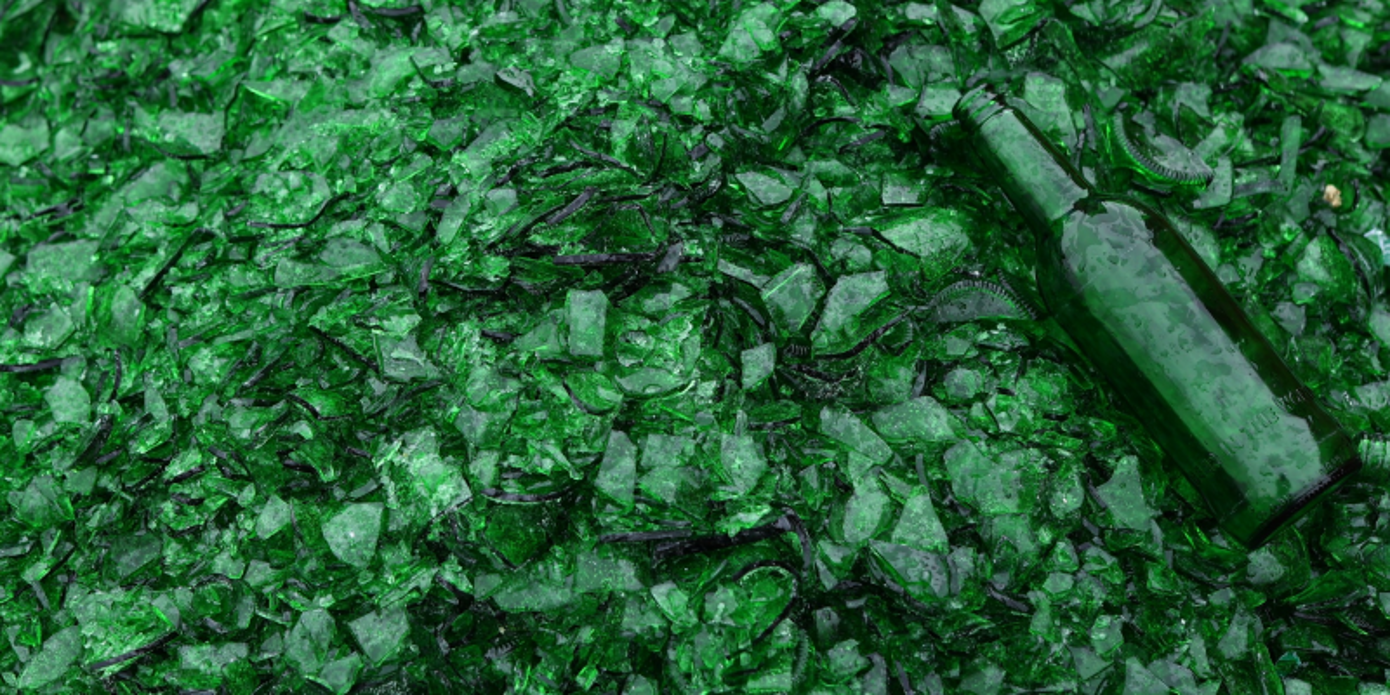
Recycled glass cullets from our recycling partners being prepared for reintegration into our bottling supply chain with our bottle manufacturers, reflecting our ongoing commitment to sustainable waste management.
Progress/Achievements
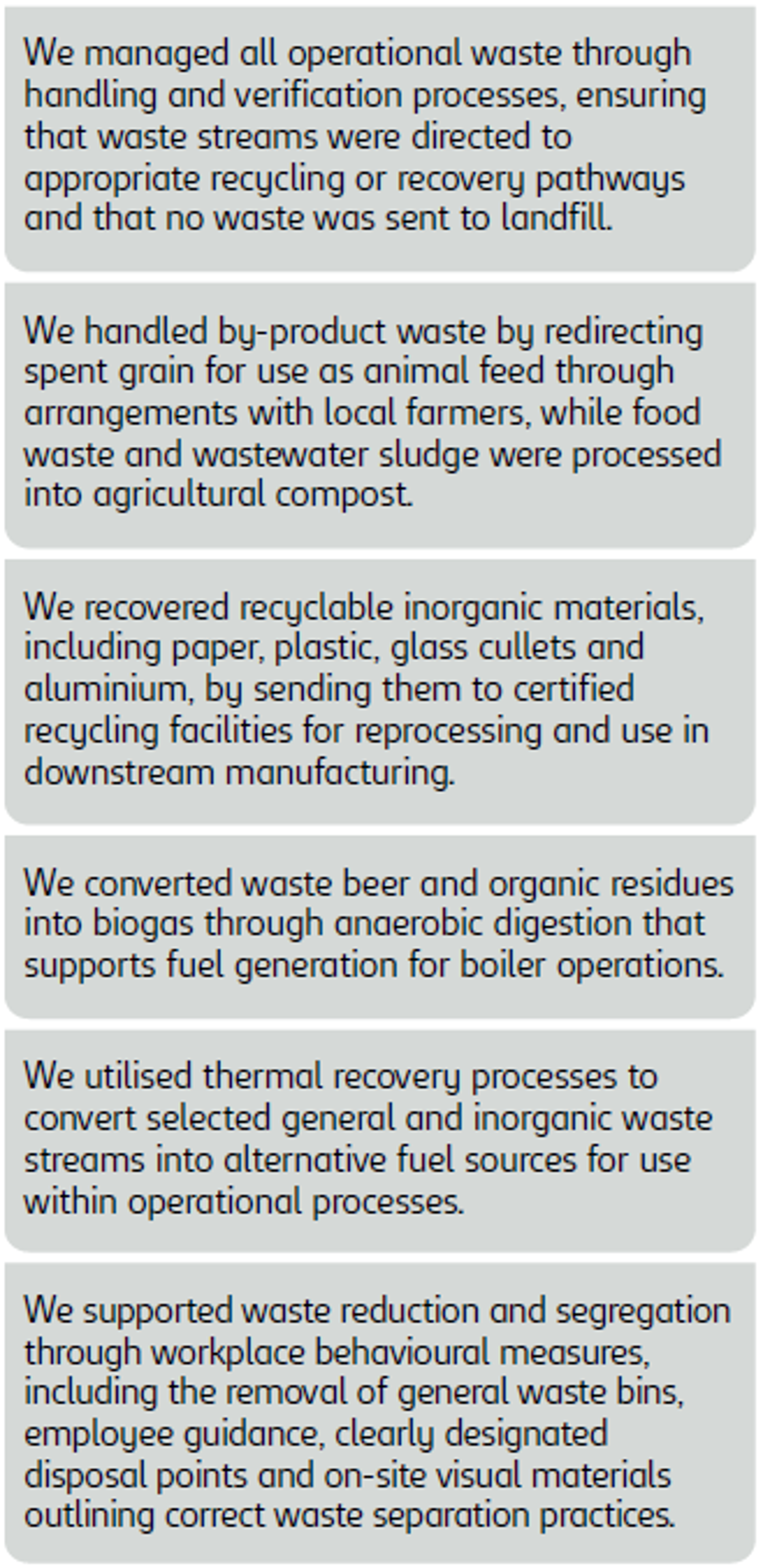
We managed waste generated from our operations through a set of initiatives that remained in place from the prior year, focusing on waste reduction, segregation and appropriate disposal:
Furthermore, we ensure that all waste generated by the Shah Alam brewery and office building is recycled, repurposed and recovered through a segregation and downstream management process. As part of Carlsberg’s circular economy and sustainable waste management approach, the three-part process is as follows:
Normal Procedure
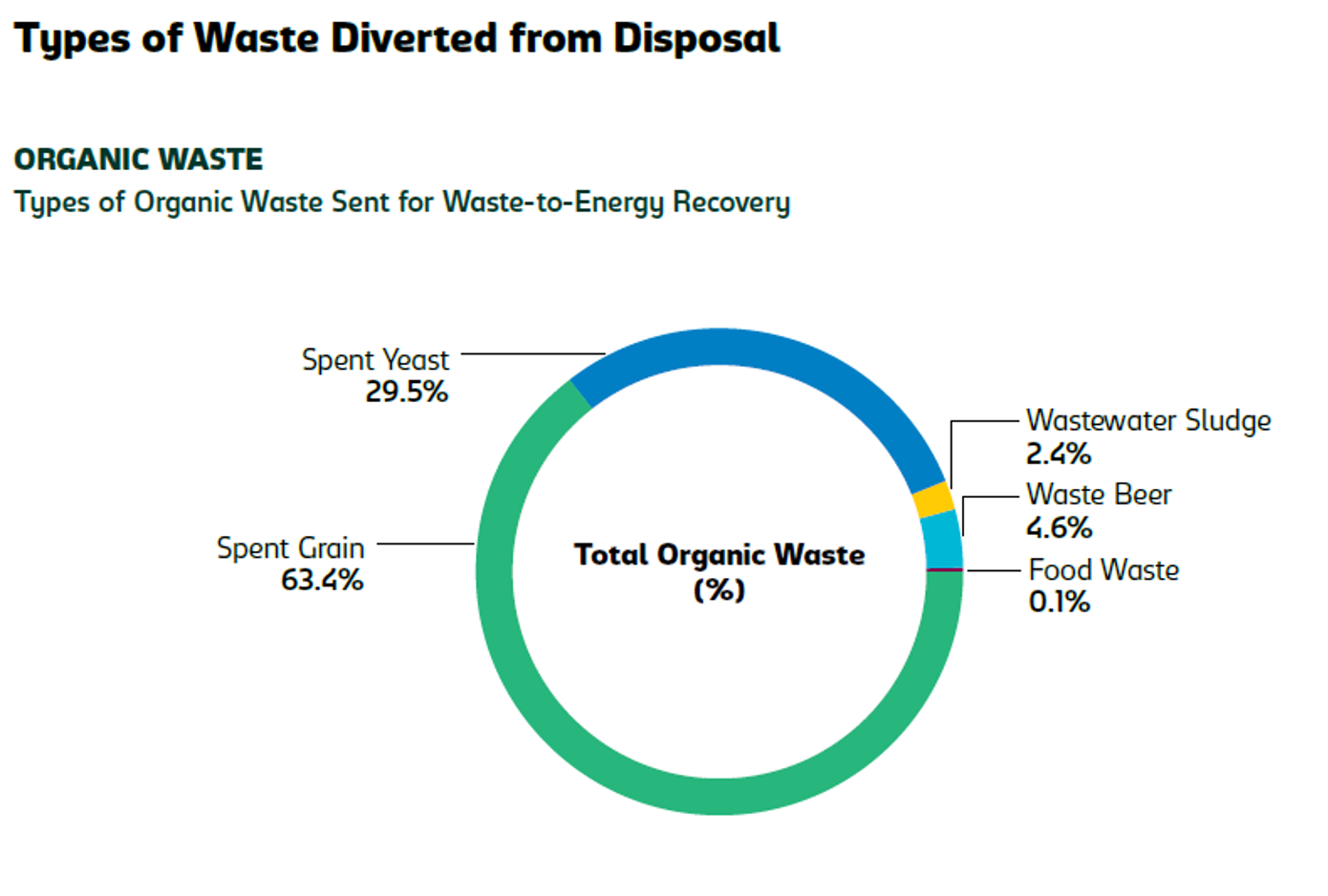
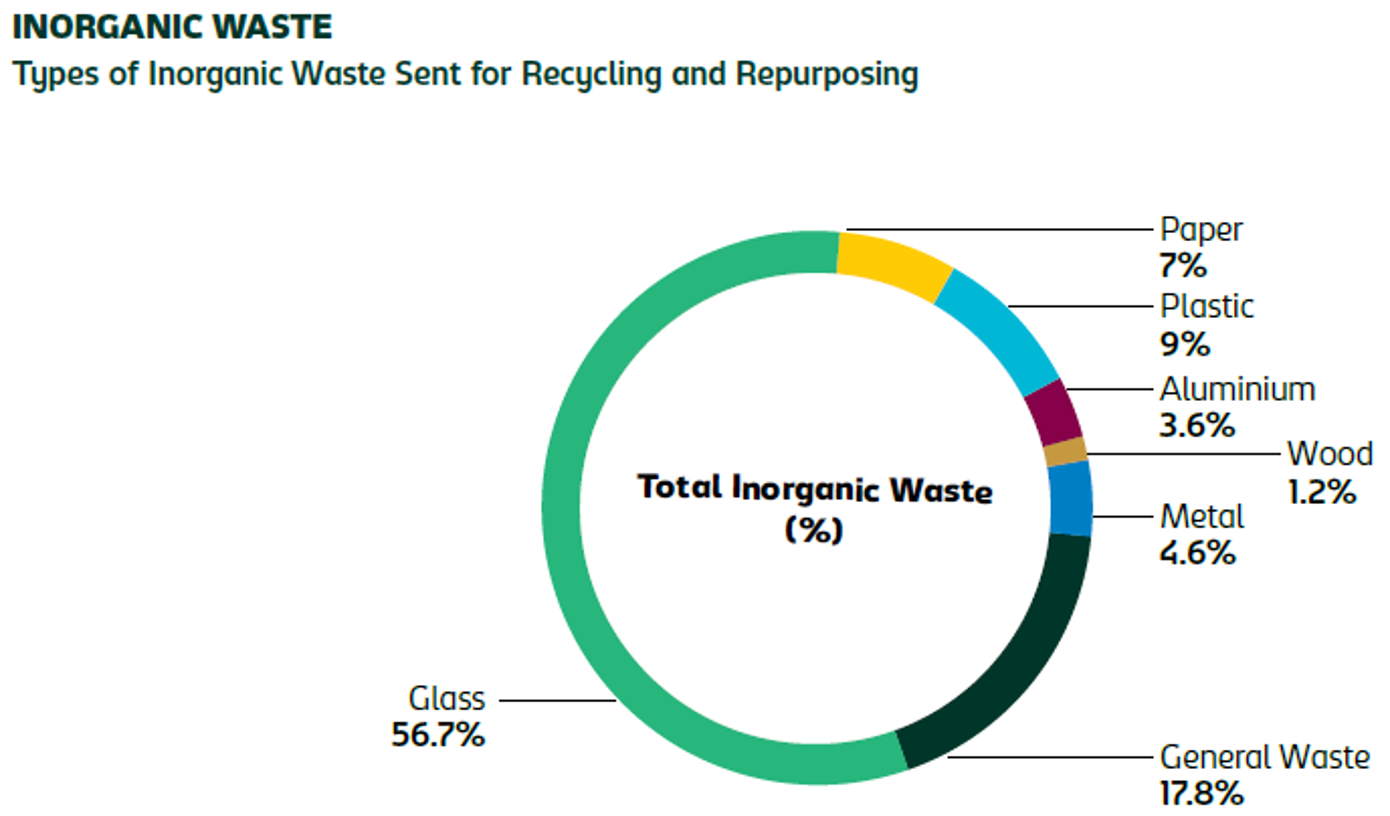
Non-hazardous waste is first separated into organic and inorganic streams before being sent to certified recycling facilities as part of our contribution to the circular economy. Organic waste includes food waste, sludge from the wastewater treatment plant, waste beer and brewery by-products, such as spent grain and spent yeast, while inorganic waste consists of aluminium, plastic, glass, paper, corrugated boxes and metal.
Hazardous waste, handled separately, is disposed of responsibly through licensed waste management partners in accordance with ESG and regulatory
requirements.
Write-off Item(s) and Chemical Liquid Disposal Flow
Write-off items and chemical liquid waste are managed through a disposal process coordinated between area owners and the recycling yard. The process begins when the area owner notifies the recycling yard owner of the item description and quantities requiring disposal.
Upon receiving this information, the recycling yard confirms the appropriate disposal method. Once the disposal method has been confirmed, the area owner transfers the items to the recycling yard. Disposal is then completed by the recycling yard in accordance with the agreed method.
Product-on-Hold (POH) and Market Return Item(s) Disposal Flow
Items identified for scrapping under POH and market returns are processed through a notification-led disposal workflow. Notification emails are issued for stockkeeping units approved for scrapping, following which the responsible function arranges delivery of the items to the recycling yard and confirms the transfer via email.
The recycling yard then proceeds with scrapping in accordance with the agreed disposal method. Disposal status updates are communicated to all relevant parties upon completion.

Transforming Brewery Waste through Bioconversion
At Carlsberg Malaysia, specific brewery by-products generated through brewing and packaging operations are managed through defined recovery pathways rather than disposal. Since 2018, spent yeast and Brewery Spent Grains (BSG) have been directed into a bioconversion process that enables their continued use beyond brewery operations. These by-products are transferred to Veolia, our waste recovery partner, as part of an established waste recovery arrangement. The materials are used as feedstock for black soldier fly larvae, which are subsequently processed into insect-based ingredients for animal feed. The remaining bioconversion output (frass) is applied as agricultural fertiliser, allowing residual material from
the process to be returned to productive use.
The scope of this arrangement expanded following the installation of new bottles and cans filling lines in 2022 and 2024 respectively, which increased the volume and consistency of by-products handled through the recovery process. The expansion did not introduce new recovery methods but extended the application of existing processes to a larger operational footprint. The arrangement contributes to progress across several UN SDGs, including Responsible Consumption and Production (SDG 12), Climate Action (SDG 13) and Partnerships for the Goals (SDG 17), based on the operational outcomes achieved rather than future commitments.
Going Forward
In 2026, we will continue to operate and refine our established waste management and recovery processes across brewery and office operations. We will focus on maintaining effective waste segregation, verification and monitoring practices and support consistent diversion from disposal through recycling, recovery and energy utilisation pathways. We will also continue working with appointed waste management and recovery partners to ensure waste handling remains aligned with contractual and regulatory requirements while simultaneously monitoring performance data to ensure we make informed decisions on waste management within our operations.
Central & Eastern Europe and India
-
Azerbaijan
-
Belarus
-
Bulgaria
-
Canada
-
Croatia
-
Estonia
-
Greece
-
Hungary
-
India
-
Italy
-
Kazakhstan
-
Latvia
-
Lithuania
-
Serbia
-
Ukraine